
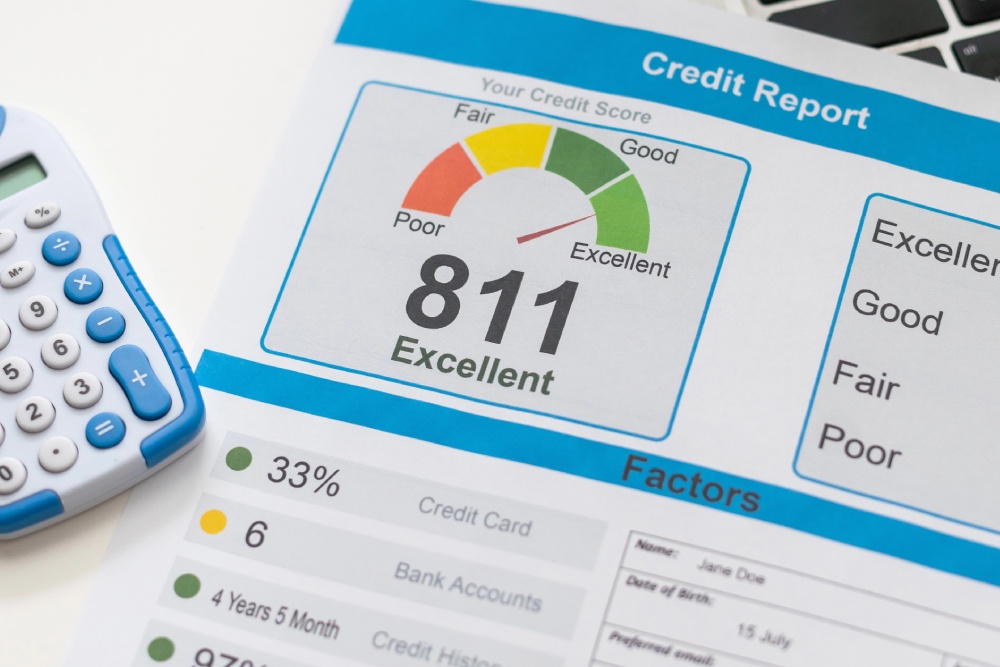
Understanding the difference can help in real-life situations like applying for an apartment, financing a car, or responding to identity theft. It can also help when a lender or another company makes a decision based on inaccurate information.
For consumers in New York and New Jersey dealing with credit reporting problems, consumer law attorneys at Sherman & Ticchio PLLC provide legal help related to inaccurate consumer reporting and identity theft issues.
What Is a Credit Report?
A credit report is a file about a consumer that is compiled by a credit reporting agency. It is built from data sent by lenders and other furnishers. It can include identifying information, account history, payment patterns, balances, and negative items such as collections. Likewise, it may also show a history of inquiries.
A key point is that a credit report is not a score. Scores are calculated from report data using a scoring model. Different scoring models can produce different numbers even when the underlying report data is the same.
Credit reports can contain mistakes. Some are simple, like a misspelled name or a wrong address. Others can be serious, such as a mixed file that pulls in another person’s account or identity theft accounts that do not belong to the consumer.
What Is a Credit Check?
A credit check describes access to credit information for a purpose. It can happen when you apply for credit, ask for a higher limit, or apply for housing. In some cases, a credit check can also occur for account review by an existing lender.
The credit check is not a separate document. It is a request, and the result is that a third party receives some version of your credit file. The company that requests the information typically receives a report or a summary, depending on the situation and the type of request.
Some consumers notice a credit check only after the fact, when they see an inquiry listed on their report. That inquiry is a record that someone accessed credit data.
The Role of “Hard” and “Soft” Inquiries
Many conversations about credit checks turn into a discussion about inquiries. Inquiries generally fall into two categories.
A hard inquiry is typically tied to an application for credit. It can appear when applying for a credit card, auto loan, or mortgage. Hard inquiries can be visible to other lenders and may affect credit scores, depending on the scoring model and the overall profile.
A soft inquiry is not tied to a standard credit application in the same way. It can occur for prequalification offers, account review, or when you check your own report. Soft inquiries generally are not visible to lenders in the same way and do not usually affect scores.
The practical takeaway is that the same consumer data can be accessed in different contexts. That context is part of what people mean when they say “credit check.”
Common Situations Where Credit Checks Come Up
Credit checks can appear in routine life events. Understanding that a check is an access event can make these situations less confusing.
Applying for a loan or credit card
The lender uses a credit check to evaluate risk and confirm identity details. The lender may review the report and a score. If the lender relies on a report that contains errors, the application can be denied or approved on worse terms than expected.
Renting an apartment
Many landlords and property managers use tenant screening that can include credit information. Some screening systems combine credit data with public records and address history. An old collection account, a mixed file, or identity theft can cause problems here.
Insurance
Some insurers use credit-based information in underwriting or deposit decisions, depending on state rules and company policy. Consumers may learn about a check after seeing an inquiry or after receiving a notice tied to an adverse decision.
Existing account reviews
Some lenders periodically review existing customers. This is a type of credit check that does not always involve a new application. It can still show as an inquiry on the report.
What to Do If Your Credit Report Has Errors
When people say “my credit check was wrong,” the issue is usually the report data. Errors can come from the bureau, from a furnisher, or from identity theft.
A practical approach is to focus on documentation and a clear timeline.
First, get copies of your credit reports from all three major bureaus. Review identifying information first, then accounts, then inquiries. Look for addresses you never used, accounts you do not recognize, and negative items that do not match your history.
Second, collect supporting records. Depending on the problem, that can include account statements, letters from creditors, identity documents, and police or FTC identity theft reports.
Third, dispute inaccurate items with the credit reporting agency. Disputes should be specific, written clearly, and supported with documents. Keep copies of what you send and track deadlines.
If identity theft is involved, additional steps may apply, such as placing a fraud alert or security freeze, and contacting affected creditors.
Credit Report Attorneys in New York and New Jersey
Many credit reporting issues can be handled through standard disputes, but some problems do not resolve easily. A consumer might face repeated re-reporting of the same inaccurate item, failure to correct a mixed file, or harm from inaccurate data that should have been handled with care.
In those situations, it may help to speak with a credit report lawyer about rights under the federal Fair Credit Reporting Act. The FCRA is a federal law that regulates how consumer reporting agencies collect, report, and correct information.
At Sherman & Ticchio PLLC, we are prepared to represent New York and New Jersey consumers dealing with inaccurate credit reporting and identity theft-related credit reporting issues. For more information, contact us today.